

American comics come out the newspaper strip tradition. They broke out on their own as magazines, many of them monthly anthologies. Some characters became super-popular and were launched as magazines starring only that character. These magazines were sold primarily at newsstands. As such, they were not serialized but episodic as this was the model in pulps and radio. You could buy this month’s issue of a comic and you’d get a full story or several full stories. It was only decades later that serial storytelling - stories that are not completed within on e issue but require the reader to buy the next episodes - was rolled out.
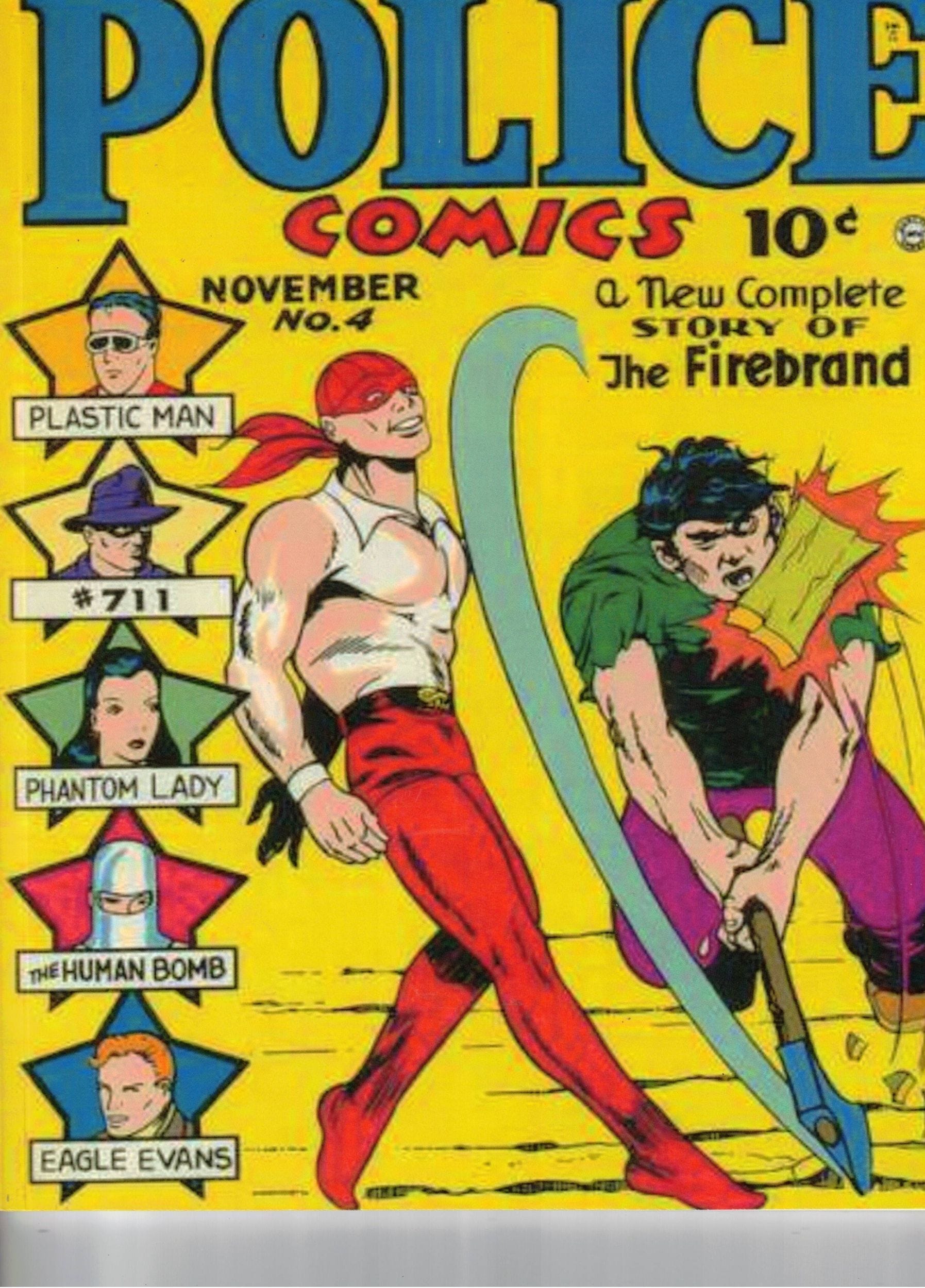
Comics, at their inception were episodic. A single episode comic came to be called “one-shots” or “done-in-one”. Ironically, they deliver what serialized comics often promise but rarely land: a story that begins, builds, and ends. No waiting for issue #47. No retcon homework. Just a complete meal. In an age of infinite Marvel/DC crossovers and perpetual second act superhero storytelling, the one-shot goes against the grain.
The Endless Arc Fatigue
The history of the rise of serialized storytelling in comics parallels the comics market moving away from the newsstand and into specialty comics shops (direct market). Because comic shops can not rely on walk-by traffic for its customer base, it must sell a habit forming product. Hence the introduction of the cliffhanger, the cross over, the “continued in…” and so forth. All designed to keep the customer coming in the store habitually. The result is that comics thrive on addiction, not closure.
Readers love serialized formats as it expands on the fictional world and makes it feel more vast and immersive. But it’s a difficult balance to strike. If it’s all tease and no reward, readers burnout. And strange questions arise such as the debate as to why the Joker is still being put behind bars after escaping for the 305th time.
Craft Under Pressure
The one-shot may run counter to market pressures but when well done, it is a delight to read! This recent episode of the Comics Odyssey podcast explores a brilliant example of one-shot storytelling!
What are the strengths of the one-shot? It stands out amidst a sea of books that are decompressed and rarely ever deliver a satisfying ending. Also, limited pages force economy. The story must be complete by the end of the book. Conversely, since the story is freed from the duty of nurturing subplots that are resolved in future issues, the main story can be given more real estate.
With Spirit-Girl I am beginning to find a recipe that works for me as a creator. All comics will now be 32 pages (including cover and back cover). Each story is intended to be readable on its own without requiring prior knowledge. And after Spirit-Girl #4, I will be exploring several one-shot books. Having come up in a time where the episodic and serial formats were blending deliciously (X-Files, Deep Space Nine) I envision doing something similar. Many one-shots with a greater overall arc peppered throughout.
In addition to this, Spirit-Girl’s story is NOT meant to go on in perpertuity. It has an ending. I already wrote it. I already know what the last panel on the last page will be.
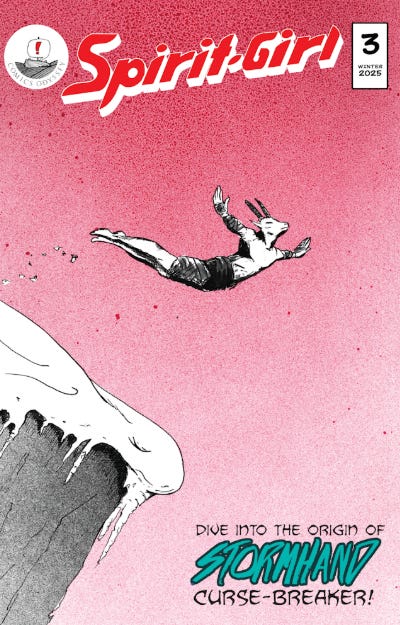
Will there be more stories told in Northand or Estland or other lands of Toralin (the planet)? There can be, the potential is endless. But Spirit-Girl… her story WILL end someday. So get in on this right now! Grab Spirit-Girl #3 here - a complete story in 32 pages but an important chapter in the great saga.
In Defense of One-Shots
I believe the one-shot is an underused format in modern comics.
For readers: The one-shot offers a higher chance of satisfaction. You will get a complete story. Hopefully you can finish it energized, not exhausted. One-shots reread beautifully as they have a familiar three act structure and are the complete package. Also, if you don’t like the story, with one-shots, you know the next story will be different and not a continuation of the thing you dislike.
For indie creators: The one-shot is a low risk option. You get to move on more quickly to the next story which allows you to experiment without committing to the experiment over multiple issues. You also get the feeling of closure once the book is done.
How about you? Do you prefer one-shots or long arcs? What is your favourite standalone comic? Drop comments below.
The happy medium seems to be stories that can stand on their own while also building a greater whole. The earliest issues of Spider-Man managed this -- there was some sense of progression from issue to issue, but most issues were complete in and of themselves, and two- and three-parters felt like special occasions.
My husband and I listened to some Superman radio shows that were definitely serialized. It was no loss that they were all out of order and missing episodes, though: the narrator caught you up!